![brioHR-logo-color.svg]](https://support.briohr.com/hubfs/brioHR-logo-color.svg)
Audience & Scope
Audience: HR Admin & Payroll Managers
Module: Payroll
Country: Singapore
Prerequisites: User group permission - Payroll module access, permission to delete payroll cycle
Why test your calculation settings?
Before your parallel run, you can check that brioHR calculates prorated salary, unpaid leave, and overtime the way you expect. You do this in a test payroll cycle. It is only a simulation: no salaries are paid, and you delete the cycle when you finish.
Testing first means that if the parallel run shows a difference, you already know these settings are right and can look elsewhere for the cause.
Before you start
- Your payroll center's calculation settings are set up in: HR Lounge > Payroll > Settings > General. These decide how proration, unpaid leave, and overtime are calculated. See Payroll Singapore: How to Set Up Company Payroll General Settings
- You know what result to expect. Work out the expected amount for each test by hand, or take it from your old payroll system, before you run the test.
- You have the permission Allow access to delete payroll cycles. You need it to delete the test cycle afterwards. An Admin turns it on under Admin Settings > User groups > HR Modules Permission > Payroll Module.
- Do not release or send payslips from the test cycle.
Step 1: Start a test payroll run
- Go to HR Lounge > Payroll > Run Payroll.
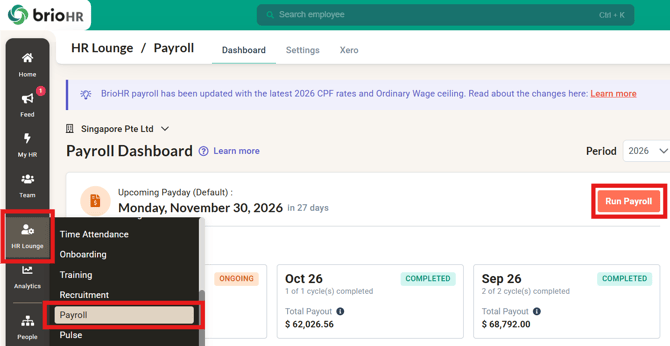
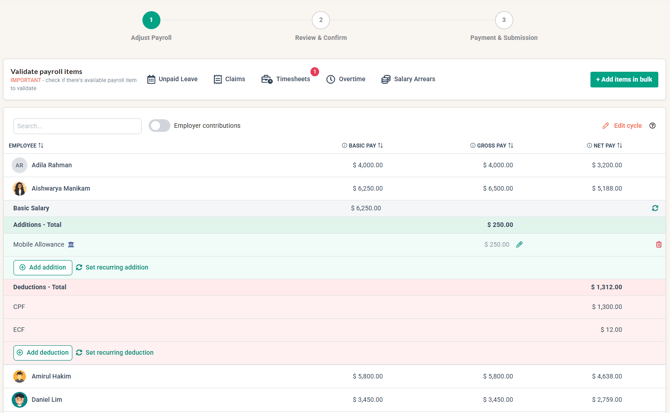
- Start the payroll run for the current month. The Adjust Payroll page opens, listing each employee with their pay items.
Step 2: Test salary proration
Proration applies when an employee joins or leaves partway through the month.
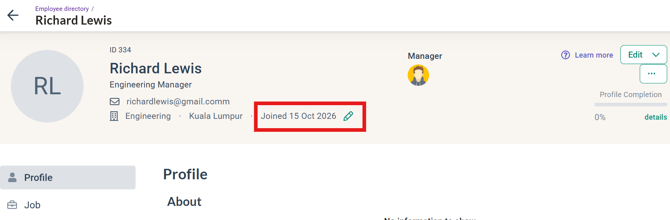
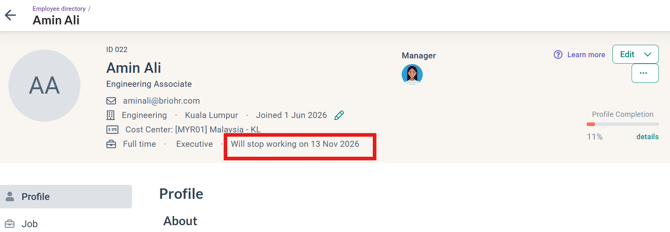
- If you have a new joiner that joined after the start of the month (join date AFTER 1st), or an employee leaving before end of the month (last day NOT end of month), use them to see if proration of salary is calculated correctly.
- To see Join date: open the employee's profile and click the pencil icon next to Joined dd mmm yyyy.
- Resign date: see How to Change or Remove an Employee's Employment End or Resign Date.
- To see Join date: open the employee's profile and click the pencil icon next to Joined dd mmm yyyy.
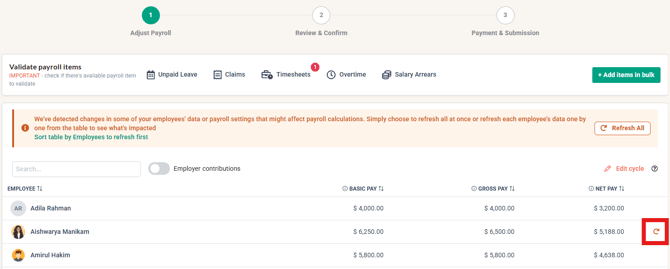
- If you changed the employee after starting the run, go to HR Lounge > Payroll > Ongoing monthly payroll and refresh the employee in the Adjust stage. See Refresh a Payroll Cycle After Employee Profile Changes.
- Check the employee's prorated basic salary against the amount you expected
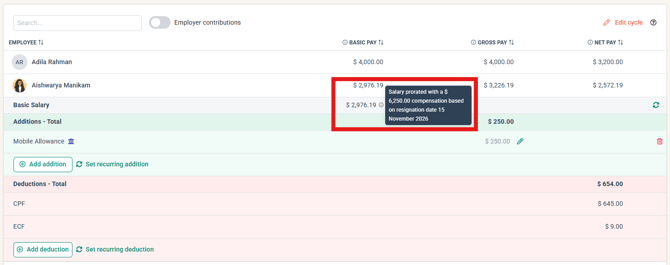
How proration works: Salary Proration for Singapore Payroll: A Complete Guide.
Step 3: Test unpaid leave
- On the Adjust Payroll page, find an employee and add the unpaid leave pay item, the same way you add any other pay item.
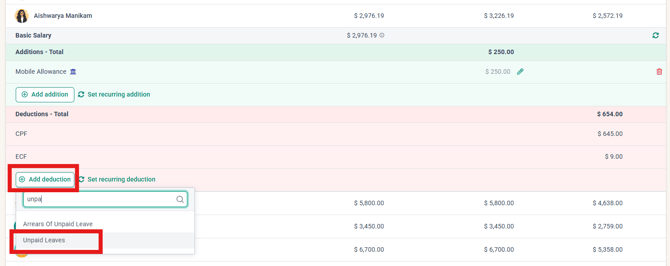


- Check the amount deducted. brioHR follows MOM's formula for no-pay leave:
- (monthly pay ÷ number of working days in the month) × number of unpaid leave days.
- For example, June 2026 has 22 working days on a Monday-to-Friday week (based on employee's work schedule), so 1 day of unpaid leave for an employee earning $3,000 a month is $3,000 ÷ 22 × 1 = $136.36.
NOTE:
Monthly pay means basic salary, plus any pay items selected in Income Basis for Unpaid Leave Calculation (HR Lounge > Payroll > Settings > General > Calculation).
If your company includes fixed allowances in the unpaid leave deduction, add them to the monthly pay when you work out the expected amount.
For example, with a $3,000 basic salary and a $200 fixed allowance selected: $3,200 ÷ 22 × 1 = $145.45.
How unpaid leave is calculated: MOM: How to compute the salary of an employee who is on no-pay leave for the month.
Step 4: Test overtime (Normal Day)
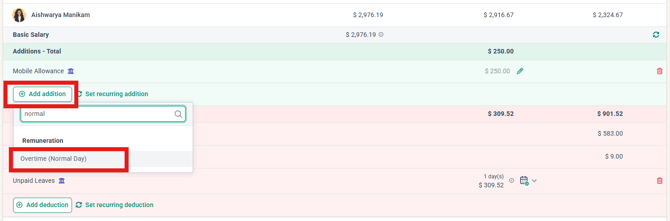
- On the Adjust Payroll page, find an employee and click + Add Addition.
- Search for Overtime and choose Overtime (Normal Day).
- Enter the hours in the + Add Hours column.
- Check the amount against what you expected.


NOTE:
brioHR calculates Normal Day overtime on the employee's basic rate of pay: the hourly basic rate × the multiplier set in Normal overtime hourly rate multiplier (HR Lounge > Payroll > Settings > General > Calculation).
The hourly basic rate is (12 × monthly basic salary) ÷ (52 × 44), and MOM requires a multiplier of at least 1.5.
For example, with the multiplier set to 1.5, an employee with a $2,000 basic salary has an hourly basic rate of $10.49, so 2 hours of Normal Day overtime is $10.49 × 1.5 × 2 = $31.47.
Step 5: Test CPF on a bonus
-
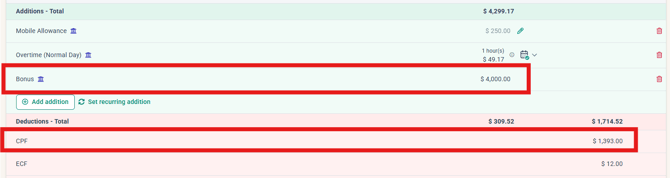
CPF treats a bonus as an Additional Wage (AW), with its own ceiling, so it is worth testing once.
- On the Adjust Payroll page, add a bonus pay item set as Additional wage to an employee.
- Check the employee and employer CPF against the CPF Contribution Calculator, using the same Ordinary Wage, Additional Wage, age and citizenship or PR status.
Step 6: If an amount is not what you expected
- Proration: check the office's work schedule (set in office settings).
- Unpaid leave: check the employee's monthly pay, the pay items selected in Income Basis for Unpaid Leave Calculation, the number of working days in the month, and the number of unpaid leave days entered.
- Overtime: check the employee's basic salary, the Normal overtime hourly rate multiplier, and that you chose Overtime (Normal Day).
- CPF: check the bonus (or any other AW pay item) is set as Additional wage, and the employee's date of birth, citizenship or PR status, and PR effective date.
- Note the difference, however small, and raise it with your Implementation Manager (IM), even if you find and fix the cause yourself.
Step 7: Clean up after testing
- If you want a copy of the results, download the cycle's reports first. Deleting a cycle is permanent.
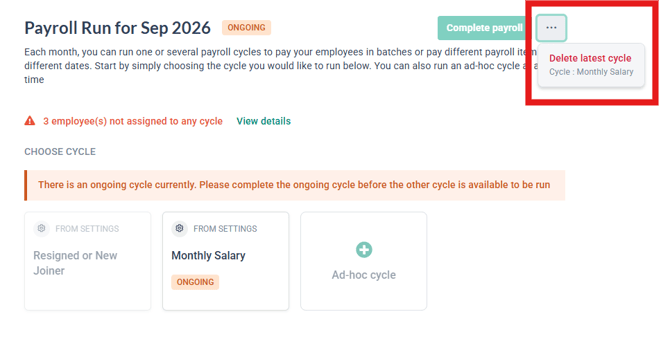
- Delete the test cycle: go to HR Lounge > Payroll, open the current payroll month, click the 3-dot menu and choose Delete latest cycle. See Delete Latest Payroll Cycle in Current Payroll Month.
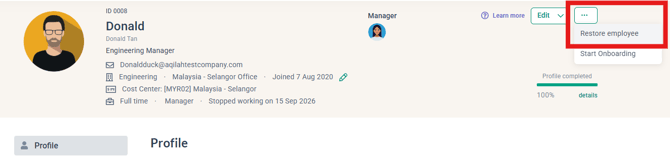
- If you changed an employee's join or resign date for the proration test, set it back to the correct date.
This is only for the test cycle. If you are running a parallel run, do not delete your parallel run cycle: its figures count towards year-to-date totals when you go live.
Common Issues/FAQ
Q: Will employees be paid or see anything from the test cycle?
A: No salaries are paid from a test cycle unless you use the bank file to pay out through your bank portal. Employees only see it if you release or send payslips, so don't release payslips from the test cycle.
Q: Do I have to run this test?
A: It is recommended, not required. It confirms your proration, unpaid leave, and overtime settings before the parallel run, so any difference you find later is easier to trace.
Q: Can I change a setting and test again?
A: Yes. Change the setting, refresh the payroll cycle, and check the amount again. See 'Refresh a Payroll Cycle After Employee Profile Changes' above.
Q: I can't see Delete latest cycle. Why?
A: You need the Allow access to delete payroll cycles permission. Ask an Admin to turn it on under Admin Settings > User groups > HR Modules Permission > Payroll Module.
Q: Should I delete my parallel run cycle too?
A: No. Only delete the test cycle. Keep the parallel run cycle: its figures count towards year-to-date totals when you go live.
Q: The difference is only a few cents. Do I need to report it?
A: Yes. Note every difference, however small, and raise it with your IM so the cause can be found before go-live.
Related Articles
- Payroll Singapore: How to Set Up Company Payroll General Settings
- Salary Proration for Singapore Payroll: A Complete Guide
- How to Create a Custom Pay Item in brioHR
- CPF Contribution Changes from 1st January 2026
- How the PR Effective Date Affects CPF Calculation
- How to Change or Remove an Employee's Employment End or Resign Date
- Refresh a Payroll Cycle After Employee Profile Changes
- Delete Latest Payroll Cycle in Current Payroll Month
- How to Process a Payroll Parallel Run in brioHR (Singapore Payroll Guide)
- How to Check Payroll Data for a Large Headcount (Singapore Payroll Guide)
Ownership
By: Aqilah